
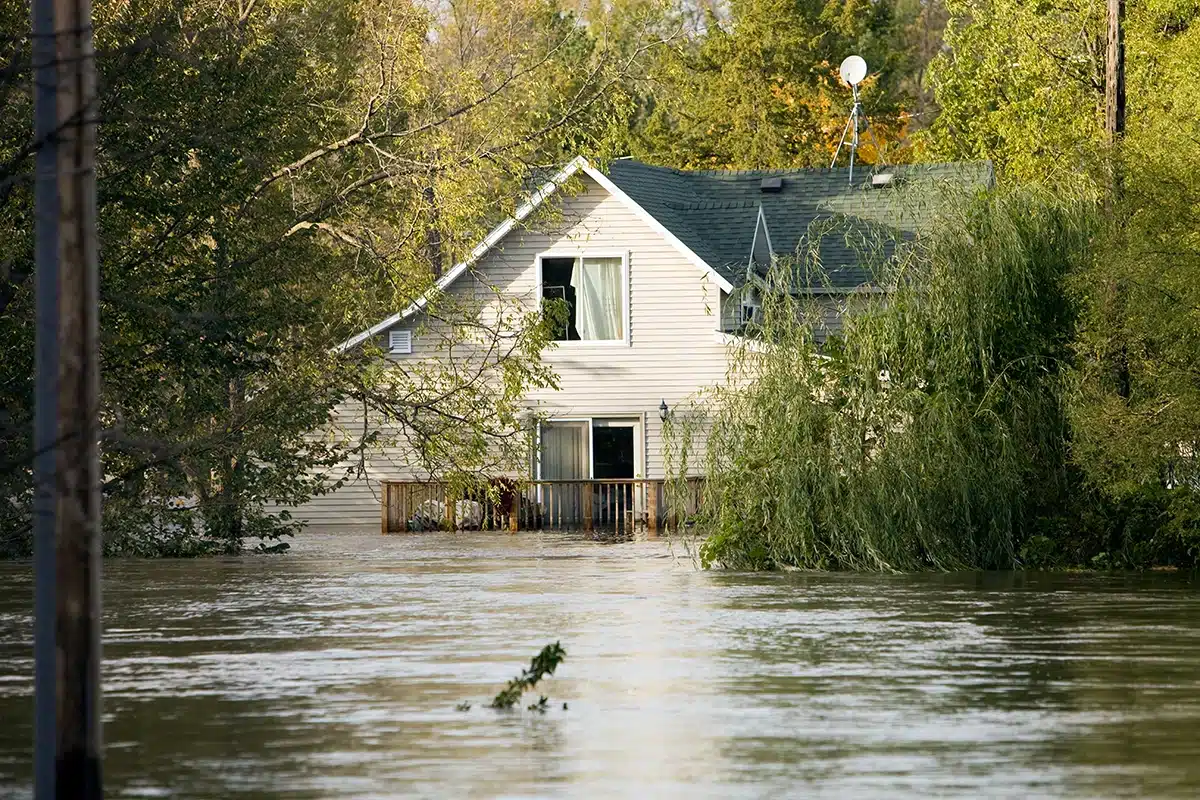
What Can Be Done To Mend a Water Damaged House?
Reinforcement and rebuilding of houses are important after the flood. Houses have been the worst hit by floods. Otherwise, when not repaired and reinforced in time, this can cause even more damage to the building structure and even put personal safety at risk. Thus, in this article, some major steps and precautions to repair and to strengthen houses after floods will be identified.
Step 1: Cleaning And Drainage
Following a flood, water can be left in the house and outside. First of all, a water pump should be used to clean sewage, dehumidifier should be used to repair water damages so that the indoor air could move fast, and water should be evaporated quickly. Even in the case of mud, debris, etc. present inside the house, it must be cleaned as soon as possible. Besides, it is required that we need to inspect whether the drainage system of the house is some how damaged and as long as it is so, we need to repair or replace the damaged drainage pipes and rain water drainage systems.
Step 2: Determine The Structural Safety Of The House
During floods, the houses structure can be damaged, including cracks in the walls, leaning columns, and leaking roofs. Hence, a professional structural engineer has to be employed to carry out a structural safety check of the house to ensure that the entire structure of the house is not ruined seriously. Structural issues should be repaired and reinforced early enough to make the house a safe place.
Step 3: Repair And Replace Damaged Building Materials
Floods can damage construction materials found both in and outside the house; gypsum boards, floors, doors, and windows. Damaged elements of the building should be repaired or substituted as soon as possible. In selecting building materials, waterproof performance and flood resistance performance should be taken into account and materials with high water resistance and flood resistance should be used to enhance the flood resistance performance of the house.
Step 4: Reinforce The Waterproofing Of The House
The waterproof performance of the house can be reduced after the flood, thus reinforced waterproof means are required. It can be done by: repairing or replacing leaking roofs, installing waterproof layers; Repairing or replacing leaking basements, basement walls, etc., and reinforcing waterproof layers; Repairing or replacing leaking floors, reinforcing waterproof layers; Repairing or replacing leaking doors and windows, and reinforcing waterproof strips.
Step 5: Enhance The Seismic Strength Of The House
Seismic resistance of the house can also reduce after the flood and hence there is need to strengthen the house structure and increase its seismic resistance. Measures that can be taken include: reinforcing the connection between the wall and the column to enhance the lateral seismic resistance; reinforced concrete beam and columns to enhance longitudinal seismic resistance; and reinforced connections between the roof and floor to enhance stability.
FinallyIt is important to note that relevant building standards and specifications must be adhered to in performing repair and reinforcement work to maintain the quality and safety of an endeavor. Meanwhile, professional engineers and architects must also be consulted to provide professional advice and guidance. House reconstruction after floods is a complicated process that should be considered in detail, taking into account various factors, including building safety, replacement and restoration of construction materials, and enhancement of waterproofing and seismic resistance. The sustainability and safety of houses can be guaranteed only with scientific and rational repair and reinforcement.